Best Drill Machine Tips for DIY and Professional Users
A drill machine seems as simple as it gets — just insert a bit, pull the trigger and create a hole. But anyone who has tried to drill into concrete, steel, wood or tiles knows that the reality can be a bit different. The bit that you intended to be using burns out, the drill wobbles off from a mark or five minutes of work somehow becomes half an hour.
We all work with nail guns at some point in our lives, and more often than not if it isn’t setting shelves up at home then it’s drilling on the next construction site in Dubai every single day and a few good habits will help. But, as important, using the correct drill machine can increase precision, protect your tools and make you work faster.
These are actually useful drill machine pointers for DIY and pro consumers on the work.
1. Match the Drill to the Material
First, don’t expect one drill to handle every application equally well.
A basic electric drill machine works nicely for timber, light metal and many household jobs. However, masonry needs impact action. Therefore, an impact drill or hammer drill makes more sense for brick and block walls.
For frequent concrete drilling, professionals usually benefit from an SDS rotary hammer rather than forcing a standard drill through tough material.
| Material | Suitable Drill Type | Common Bit |
| Timber | Drill/driver | Wood or brad-point bit |
| Mild steel | Drill/driver | HSS metal bit |
| Brick/block | Impact/hammer drill | Masonry bit |
| Concrete | Rotary hammer | SDS concrete bit |
| Ceramic tile | Variable-speed drill | Tile/glass bit |
Consequently, selecting the machine by material saves both time and drill bits. Buy Makita Cordless Drill Machine Df347dwe.
2. Choose the Correct Drill Bit
The machine provides the power, but the bit actually cuts the material.
Therefore, one of the most important drilling tips is to stop using whatever bit happens to be sitting in the toolbox. Wood bits, metal bits, masonry bits and tile bits all have different cutting designs.
Also, inspect the bit before starting. A blunt or damaged bit creates extra heat and forces the motor to work harder.
For professional users, keeping commonly used sizes organised in separate bit sets saves surprising amounts of time during a working day.
3. Don’t Assume Maximum Speed Is Better
Many beginners squeeze the trigger fully as soon as drilling begins. However, maximum speed isn’t always the best speed.
Start slowly when accuracy matters. Once the bit has created a small guide point, increase speed gradually.
Meanwhile, when working with metal, excessive speed can generate heat and reduce bit life. Tile drilling also needs controlled speed and care. Bosch’s current professional guidance, for example, recommends lower-speed drilling for ceramic tile applications.
So, instead of thinking “more RPM means faster drilling”, match the speed to the material.
4. Mark the Hole Before Drilling
Professionals measure first because fixing a badly positioned hole takes much longer than marking one properly.
Use a pencil, marker or centre punch depending on the surface. Additionally, check the position with a spirit level when you’re installing shelves, cabinets or wall-mounted equipment.
On smooth surfaces, the drill bit may wander when it first touches the material. Therefore, create a controlled starting point before applying full pressure.
A small bit of preparation usually gives a much cleaner finish. Buy Makita Ddf453 Cordless Drill Machine.
5. Let the Drill Do the Work
Just because a drill is being forced harder does not mean that it will cut faster.
In fact, too much force can overheat a bit or overload the motor or may cause you to lose control of the machine. Apply firm, steady pressure instead.
Stop drilling and figure out why (if the drill appears to be struggling.). Perhaps the bit is blunt. Perhaps the format of the drill. Or, put more simply, the machine isn’t made for that material.
This is especially true for drilling in concrete, where overworking a light-duty machine can lead to shorter tool life.
6. Understand Corded vs Cordless Drills
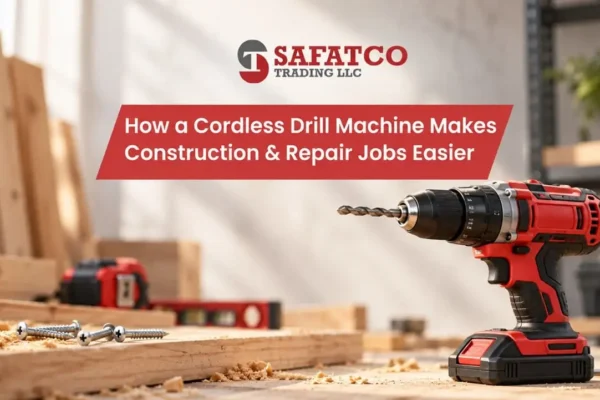
Cordless drill machines provide you with great mobility especially when it comes to installation jobs, maintenance calls and for the places where placing power points is inconvenient.
On the other hand, you can have a corded drill machine which can provide direct power without any battery shall interruptions. So, it is helpful for longer workshop or site exercises.
| Feature | Cordless Drill | Corded Drill |
| Mobility | Excellent | Limited by cable |
| Continuous runtime | Battery dependent | Excellent |
| Quick site jobs | Very convenient | Less convenient |
| Long drilling sessions | Spare batteries helpful | Well suited |
| Access to power needed | No | Yes |
Safatco Trading’s current power-tool guidance similarly distinguishes cordless tools for mobility from corded equipment for extended, continuous work.
7. Use Torque Settings Properly
Those numbered settings around a drill driver’s chuck aren’t decorative.
The clutch controls how much rotational force reaches the screw. Therefore, lower settings help with smaller screws and softer materials, while higher settings suit larger fixings.
When drilling, switch to the drilling mode rather than leaving the machine on a low clutch setting.
Additionally, controlled torque helps prevent stripped screw heads, damaged timber and screws driven too deeply. Buy Makita 6271DWE Cordless Drill Machine.
8. Keep the Drill Straight
This last one is the subject of this post: a crooked drill makes a crooked hole. It’s simple but you see this mistake happening all the time.
Align the machine with the hole, and keep the angle steady while you drill. For deep holes, stop sometimes and check where you are.
Additionally, establish a process where you remove the bit from time to time when penetrating considerably into wood or masonry materials. This way you can clear dust/debris and not pack it deeper into the hole.
9. Don’t Ignore Safety
A tiny power drill can bite out metallic chips, masonry dust or wooden pieces to help your face.
Therefore, wear suitable eye protection. Wear suitable respiratory protection, dust-control measures as needed if this is dusty masonry work
Check walls before you drill where electrical cables or pipes can be hidden. Professional users should adhere to the site procedure, no guess work.
Finally, in the right scenarios turn off power or unplug when switching out accessories.
Buy Products on,
» Makita Dp4700 Drill Machine Corded
» Makita Hr2460 Drill Machine For Concrete
» Makita Nhp-1300s Drill Machine 13mm
» Dewalt – Cordless Drill 12v DCD710D2 B5
10. Look After Your Drill Machine
If you stop treating your drill like it was a single-use tool, a good quality drill will last considerably longer.
Remove the dust that collects after work, and keep your air vent openings clear. Also check the chuck, cable and battery connections and accessories.
When it comes to storing batteries in tools, for cordless power tool batteries — try to avoid high heat if you can. Alternatively, cycle batteries on working professional websites rather than having one pack killing after another.
A couple of minutes devoted to maintenance now can save you from an untimely breakdown in the middle of your following undertaking.
Related Articles:
» Makita Cordless Hammer Driver Drill DHP481
» Bosch Brushless GSR 18V-50 Professional Drill/Driver
» DEWALT DCD791 Brushless Drill Driver
» DEWALT DCD996 18V XR LI-ION Premium Hammer Drill Driver
» STANLEY 18V 2Ah Li Ion Hammer Drill
Choosing a Drill Machine in Dubai
However, the topmost drill machine in Dubai may not necessarily be the one with the highest impression of wattage, voltage or torque figure. Instead, it has to reflect your real work load.
A home owner putting a piece of furniture together wants something totally different than a contractor drilling concrete day in and day out.
So think about the other materials you use regularly, hole sizes, how long you expect to run it for, if electricity is accessible (may be necessary), chuck type and any accessories you have or may need before purchasing.
Safatco Trading – Dubai, provides drill machines and power tools for DIY applications, maintenance & repair market, workshop and construction applications. The right tool from the start allows you to drill in a clean and faster manner and much less frustrating.
FAQs: Best Drill Machine Tips for DIY and Professional Users
1. Which drill machine is best for home DIY work?
A small cordless drill driver is handy for general home use such as light drilling in timber and screws for furniture assembly.
2. Can a normal drill make holes in concrete?
With some hammer drills, you can perform light masonry drilling. But for most concrete work you will need a rotary hammer drill.
3. What drill bit should I use for steel?
Use a suitable HSS metal drill bit and control the drilling speed to reduce excessive heat.
4. Is a cordless drill better than a corded drill?
Neither is universally better. Cordless models provide mobility, while corded drills offer uninterrupted power for longer tasks.
5. Why does my drill bit keep slipping?
The bit may not be seated correctly, or the chuck may not be tightened enough. Stop the drill and refit it properly.
6. Why does a drill bit become very hot?
Excessive speed, heavy pressure, a blunt bit or unsuitable drilling technique can generate unnecessary heat.
7. Should I push hard while drilling concrete?
No. Apply steady pressure and let the drill’s hammer mechanism and masonry bit perform the cutting.
8. What is the difference between a hammer drill and rotary hammer?
A hammer drill suits lighter masonry work. In contrast, an SDS rotary hammer provides a stronger hammering action for demanding concrete drilling.
9. Can I use the same drill bit for wood and metal?
It’s better not to. Material-specific bits normally provide cleaner holes and more efficient drilling.
10. How can I drill a straight hole?
Mark the position carefully, start at low speed and keep the drill aligned with the intended drilling angle.
11. How often should drill bits be replaced?
There isn’t one fixed interval. Replace or sharpen them when cutting performance drops, edges become damaged or excessive heat develops.
12. Where can I buy drill machines in Dubai?
Safatco Trading – Dubai offers drill machines, rotary hammers, accessories and other professional power tools in Dubai for different applications.