
Training Staff on Tool Safety: A Dubai Manager’s Guide
To keep crews safe and productive in Dubai, managers must standardize tool safety training, enforce PPE, verify permits to work, and audit lockout/tagout—then coach continuously.
Why tool safety matters in Dubai projects
Dubai sites move fast, and deadlines arrive sooner than expected. Yet injuries halt progress instantly. Therefore, a strong tool safety culture protects people, preserves schedules, and safeguards profit. Moreover, clients watch incident metrics; safe teams win repeat work. Consequently, managers who train well outperform, especially on multi-trade fit-outs and maintenance. Buy Vaultex Safety Boots Black in Dubai.
Build a simple, repeatable training framework
First, standardize the curriculum. Then, deliver it in short bursts that stick.
- Induction (day one): Cover site rules, PPE, reporting, and emergency contacts.
- Tool-specific modules: testers, nailers, grinders and ,Drills,.
- Practical demos: cutoff procedures, stance, safe grips, and Hands-on checks,.
- Assessment: Quick quizzes plus sign-off by a competent supervisor.
- Refreshers: Monthly micro-sessions tied to incident trends.
Because the plan repeats, new hires align quickly and veterans stay sharp.
The “Five Checks” before any tool powers up
1) Condition: Inspect guards, cords, plugs, batteries, and triggers.
2) Setup: Confirm voltage, discs/blades, and torque settings.
3) Space: Clear trip hazards; establish a stable stance and escape line.
4) Controls: Test emergency stops and dead-man switches.
5) PPE: Wear dust masks, hearing protection, cut-resistant glovesANSI goggles,, and where required.
Therefore, teach crews to verbalize these checks;and thus habits form fast when spoken aloud. Buy Safety Jacket Green Mesh Type Small in Dubai.
Control dust, sparks, and energy—every shift
Dubai interiors often stay occupied during fit-outs. Therefore, dust control keeps clients happy and lungs healthy. Use M-class extractors, sealed bags, and antistatic hoses. In addition,for heat and sparks , issue Type ABC/K extinguishers,fire blankets, and hot-work permits, . For the time being, for powered systems, enforce lockout/tagout (LOTO) with clearly labeled breakers and valve tags. As a result, accidental energization becomes unlikely.
Match tools to materials—and train the difference
A grinder on stainless behaves unlike on mild steel. Likewise, MDF dust isn’t hardwood dust. Because risks vary, teach material-specific handling:
- Wood & MDF: Use extraction, sharp blades, and push sticks.
- Metals: Choose guarded grinders, correct discs, and spark control.
- Concrete & tile: Wet-cut where possible; manage silica dust carefully.
- Live systems: Only authorized techs use testers and insulated tools.
Moreover, post cheat-sheets at the charging station; quick reminders reduce mistakes. Buy Fire Safety Blanket White-red 1.5×1.8 Meter- Dubai.
Micro-coaching that actually changes behavior
Rules help; coaching changes habits. Therefore:
- Observe briefly at start of shift; praise one safe action first.
- Correct kindly, then demonstrate the alternative grip or stance.
- Rotate mentors so advice doesn’t bottleneck.
- Close the loop with a sixty -second recap in the next toolbox talk.
Because feedback stays frequent and respectful, crews adopt safer technique quickly. Buy Safety Jacket Green Fabric Type M in Dubai.
Documentation that protects people—and you
Keep a tidy trail:
- Training matrix with modules and expiry dates passed.
- Equipment register with serial numbers and inspection intervals.
- near-miss log/Incident that triggers targeted refreshers.
- PPE issuance records tied to employee IDs.
Additionally, print QR codes on tool racks linking to SOPs and quick videos. Consequently, knowledge stays at arm’s length.
Related Articles:
» How to Use Power Tools Safely and Efficiently
» Safety Tips for Using Drilling Machines in Dubai
» Choosing Power Tools in Dubai: What You Need to Know
» Essential Safety Tips When Using Power Tools at Home
» Safety Tips for Using Grinder in the Workplace
Common pitfall and how to avoid them
- Discs and dull blades: Replace on schedule; dull is equally dangerous.
- Messy charging zones: Separate batteries by brand; prevent incompatible chargers.
- Crowded cuts: Assign a spotter for long rips or overhead work.
- Rushing punch lists: Add micro-breaks; fatigue fuels errors.
Therefore, remove friction points, and risk drops immediately.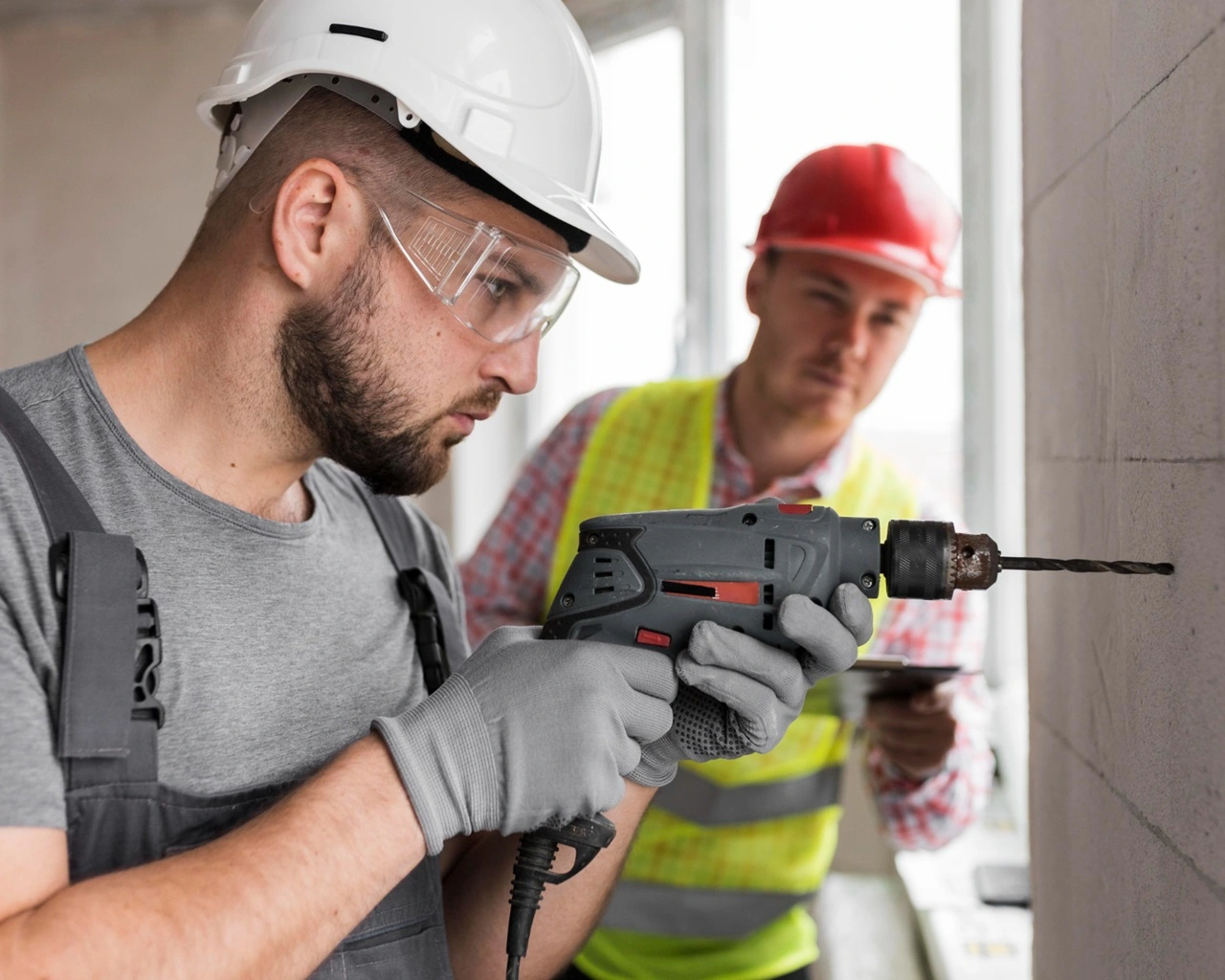
Quick checklist for daily briefings
- Today’s permits and LOTO tags verified
- Top three hazards on this shift
- Tools needed and PPE reminders
- Emergency contacts and muster point
- One 60-second micro-demo (e.g., grinder guard set)
FAQs: Training Staff on Tool Safety
1) How long should induction take?
Aim for two hours with demos, then tool-specific modules during week one.
2) Do I need monthly refreshers?
Yes. Usually short, targeted sessions address incident trends and sustain habits .
3) What PPE is non-negotiable?
Eye, hand, and hearing protection; add dust masks and face shields where required.
4) Who signs competency?
A competent supervisor after a brief practical test and checklist.
5) How do I reduce dust indoors?
Use M-class extractors, sealed bags, mesh abrasives, and door seals.
6) When is hot-work permitting needed?
Any time sparks or open flames appear; include fire watch and extinguishers.
7) What’s the fastest safety win?
Teach the Five Checks before every start; behaviors change immediately.
8) Is LOTO necessary on small jobs?
Absolutely. Any energized system requires lockout and clear tagging.
9) How do I track training?
Maintain a live matrix with expiries; review weekly.
10) What motivates safe behavior?
Frequent coaching, public praise for safe acts, and clear consequences for shortcuts.