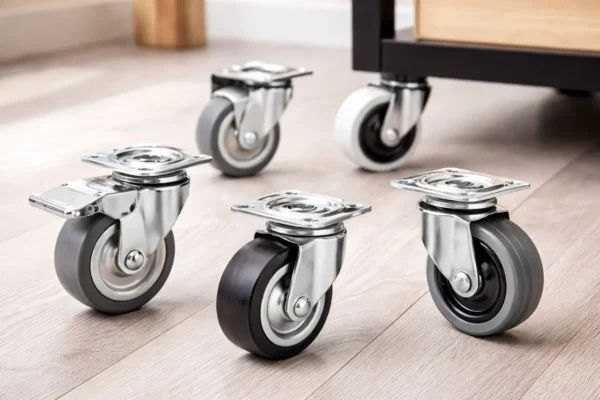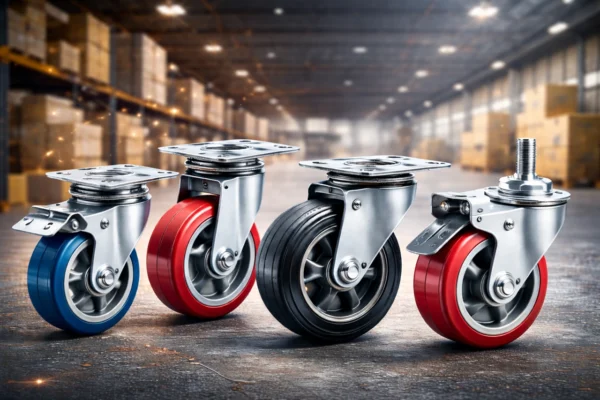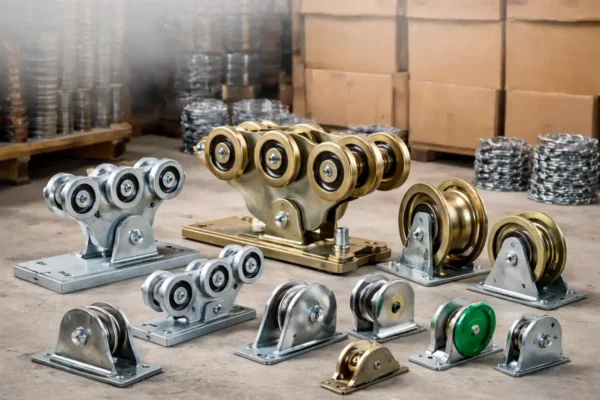

How to Choose the Right Castor Wheels for Industrial use in Dubai
If you buy castor wheels in bulk for a warehouse, factory, or site in Dubai, the “cheap and quick” option often becomes the expensive one later. Wheels that flatten in heat, seize from dust, or fail under uneven loads can slow operations, damage floors, and trigger constant replacements. So, instead of guessing, you’ll want a simple selection method that fits Dubai’s real conditions—hot loading bays, dusty yards, polished concrete, humid coastal air, and sometimes chemical or oil exposure.
This guide from Safatco Trading – Dubai breaks down how to choose the right industrial castor wheels for bulk procurement, with practical checks, a comparison table, and a bulk-buying checklist you can actually use.
1) Start with the job: where and how will the caster be used?
Before you compare catalogues, lock the working conditions. In Dubai, the same trolley can go from a chilled indoor store to an outdoor hot dock in minutes, and it matters.
Ask these questions first:
- Is it indoor, outdoor, or both?
- Is the floor polished concrete, sealed aggregate, tile, pavers or just rough yard?
- Are you moving straight-line loads or doing frequent tight turns?
- Is there exposure to sand/dust, water, humidity, oil/grease, or chemicals?
- Will it be pushed by people, or towed/handled by equipment?
Once you have these answers, choosing heavy duty castor wheels becomes a process, not luck. Buy Power Tools in Dubai.
2) Calculate the correct load capacity (and add real-world safety margin)
Bulk buyers often under-rate casters because they divide total weight by four and stop there. However, in real use, loads shift, floors aren’t perfect, and sometimes only three wheels carry the load during movement.
A reliable bulk-buy formula
- Total loaded weight (equipment + max payload).
- Assume 3 wheels carry the load (not 4).
- Add 30–50% safety margin for shocks, ramps, and uneven floors.
Example
- Trolley + goods = 800 kg total
- Per-wheel base load = 800 ÷ 3 = 267 kg
- Add 40% margin → 267 × 1.4 ≈ 374 kg
So you should source industrial casters rated ≥ 400 kg per wheel.
Tip: If you handle ramps, dock plates, or rough surfaces, go higher. Also, if the unit sits stationary for long periods, you’ll want a tread that resists flat-spotting. Buy Makita Power Tools in Dubai.
3) Choose the wheel material based on Dubai conditions
The wheel tread decides rolling effort, noise, floor protection, and durability. In Dubai, heat and dust are the two big “silent killers,” so pick materials that cope well.
Quick comparison table for bulk procurement
| Wheel type / tread | Best for | Pros | Watch-outs |
| Polyurethane (PU) castor wheels | Warehouses, epoxy floors, mixed indoor use | Smooth rolling, floor-friendly, strong load handling | Cheaper PU grades can chunk under rough yards |
| Nylon / Polyamide wheels | High load, clean indoor concrete | Very high load rating, low rolling resistance | Noisy, can mark or damage softer floors |
| Rubber / Elastic rubber wheels | Quiet movement, sensitive floors | Low noise, good shock absorption | Lower load capacity, may wear faster under heavy loads |
| Cast iron / Steel wheels | Extreme loads, harsh conditions | Highest durability, handles hot debris | Hard on floors, noisy, needs strong bearings |
| Stainless steel casters (frame) | Humid/coastal areas, washdown | Corrosion resistance | Higher cost; confirm wheel tread matches application |
For many Dubai industrial sites, PU wheels are the “sweet spot” for bulk purchases because they balance load, floor protection, and rolling comfort.
4) Pick the right configuration: swivel, rigid, or a mix
- Swivel castors turn easily and suit tight aisles, packing stations, and manoeuvring around pallets.
- Rigid (fixed) castors track straight and reduce fishtailing in long pushes.
A common, practical setup is:
- 2 swivel + 2 rigid for control and stability, or
- 4 swivel when you need very tight turning (use quality bearings + brakes).
If your trolleys drift during pushing, you may need a better mix—or better swivel bearings, not “more force.” Buy Stanley Power Tools Dubai.
5) Select wheel diameter and tread width to match the floor
Wheel size affects effort and obstacle handling.
- Larger diameter wheels roll over joints, small ramps, and debris more easily.
- Wider treads spread load and reduce floor pressure.
Dubai reality check:
- For smooth indoor floors, medium diameters often work well.
- For outdoor yards or rougher surfaces, go larger and tougher—otherwise, you’ll feel every expansion joint and crack.
Also, if you push heavy loads manually, the “right” wheel can reduce operator fatigue a lot. That’s a hidden cost saver.
6) Don’t ignore bearings: they decide lifespan and smoothness
Bearings are where many bulk buys fail. Even with a strong tread, poor bearings seize with dust or wear fast under side loads.
Common options:
- Plain bearing: basic, low cost; fine for light duty and slow movement.
- Roller bearing: handles higher loads; good for industrial carts.
- Ball bearing: smoother at speed; useful when frequent rolling is needed.
If the environment is dusty (common in Dubai), choose designs that resist contamination and specify basic maintenance rules (cleaning + periodic lubrication where applicable).
7) Choose the right mounting: top plate vs stem (and get dimensions correct)
Bulk purchasing becomes messy when different teams order different mounts.
- Top plate castors: common for industrial trolleys and equipment; strong and standard.
- Stem castors: common for lighter equipment, racks, and some furniture-style frames.
For bulk standardisation, top plates are easier to control—just ensure:
- Plate size
- Hole spacing
- Overall height (affects trolley level and clearance)
One small mismatch here can stall an entire installation, so it’s worth verifying once and then standardising. Buy Bosch Power Tools in Dubai.
8) Brakes, locks, and safety add-ons that matter in real sites
For industrial use, safety and control matter as much as rolling.
Options to consider:
- Total lock brake (locks wheel and swivel): best for stability on slight slopes.
- Directional lock (locks swivel): keeps carts moving straight in long corridors.
- Foot guards / toe guards: improves safety in busy warehouses.
- Shock-absorbing casters: useful for sensitive loads or rough movement.
If you’re ordering in bulk, it’s smart to standardise brake type for each trolley category. Otherwise, spares become a headache.
9) Corrosion resistance: a Dubai-specific decision
Dubai has both dry, dusty zones and humid coastal conditions. So, choose frame finishes accordingly:
- Zinc-plated steel: suitable for many indoor industrial applications.
- Stainless steel castors: better for coastal humidity, washdown, or chemical exposure.
Also, if there’s oil/grease exposure, confirm the wheel tread (especially PU or rubber grade) is compatible. Otherwise, swelling and premature wear can happen. Buy Dewalt Power Tools in Dubai.
10) Bulk buying the smart way: standardise, sample-test, then scale
Bulk buying castor wheels in Dubai should follow a simple procurement flow:
Step-by-step bulk procurement approach
- Create 2–4 standard caster “sets” (light, medium, heavy, extreme duty).
- Sample test on your actual floors and routes (dock plate, ramps, corners).
- Confirm load, rolling effort, and turning behaviour.
- Lock spec sheets: wheel material, diameter, bearing type, mount pattern, brake type.
- Buy in bulk + add spares (5–10%) for quick replacement.
- Standardise tools and installation methods.
This approach reduces downtime and prevents the “different wheel on every trolley” problem that kills maintenance teams.
11) Quality checks to request from any supplier (especially for wholesale orders)
When you buy industrial casters in bulk, ask for consistency:
- Clear load rating per caster (not just “heavy duty” wording)
- Wheel tread grade (PU quality varies a lot)
- Bearing type and build
- Swivel raceway strength
- Plate thickness / weld quality
- Brake effectiveness under load
With Safatco Trading – Dubai, you can align the bulk order to your operating conditions first, and then match the caster specification accordingly—so you don’t overpay, and you don’t under-spec either.
Buy Products on,
» Makita DGA452RTJ 18v Lxt Cordless Angle Grinder 115mm 5AH
» Dewalt – Cordless Drill 12v DCD710D2 B5
» Buy Stanley Cordless Drill Driver 10.8V Li-Ion
» Bosch Large Angle Grinder 7” GWS 26-180 H
» Makita GA7020 Angle Grinder 7
12) Common bulk-buy mistakes (and how to avoid them)
- Mistake: Choosing by price only
Instead: Choose by load, floor type, and environment first, then optimise cost. - Mistake: Ignoring wheel diameter
Instead: Use larger wheels for rough surfaces and ramps. - Mistake: Wrong swivel/rigid combination
Instead: Use mixed setups for long pushes, full swivel for tight manoeuvring. - Mistake: No standardisation
Instead: Build a small approved list and stick to it.

Order castor wheel : Call+971-50 925 1786
In Dubai, the “right” castor wheels are the ones that handle heat, dust, floor type, and real load behaviour—day after day. When you calculate load properly, select the correct tread and bearings, and standardise your bulk purchase, you reduce breakdowns, protect floors, and make movement easier for your team.
If you’re sourcing bulk castor wheels and want to match the best spec to your exact use case (warehouse, factory, site, racks, trolleys, or equipment), Safatco Trading – Dubai can help you shortlist the right industrial castor wheels, mounting options, and brake configurations for your environment.
FAQs: castor wheels for industrial use in Dubai
1) What is the best wheel material for heavy industrial trolleys in Dubai?
For most interior industrial applications castor wheels PU represent a good combination of high load capacity and floor protection & smoother rolling.
2) How do I calculate the correct load rating per caster?
You can put half of the load on each stick, which would mean that you need to use the total loaded weight ÷3 instead of 4 and add an extra safety cushion of at least 30–50%, in order to make sure there is room for shocks, uneven floors or change in center loads.
3) Are swivel castors better than fixed castors?
It depends. Swivel castors allow easy turning and fixed castors track straight. 2 swivel + 2 rigid is the right match for many trolleys.
4) What wheel size should I choose for rough outdoor surfaces?
Pick a larger wheel diameter and stiffer tread that enables it to roll over joints, debris and uneven ground with fewer vibrations.
5) Do nylon wheels work well in warehouses?
Yes, nylon wheels take heavy loads and roll easily on smooth, clean concrete. Then again, they can be noisy and even harder on some floors.
6) Which casters are best for epoxy floors?
Typically polyurethane (PU) castors, because they are more floor-friendly and reduce marking compared to harder materials.
7) What bearing type is best for industrial use?
For heavier loads, roller bearings or quality ball bearings generally perform better than basic plain bearings, especially with frequent movement.
8) Should I choose stainless steel casters in Dubai?
If you have humidity, coastal exposure, washdown areas, or corrosion risk, stainless steel casters are often worth it.
9) What is a total lock brake, and when do I need it?
A total lock brake locks both the wheel and the swivel. It’s useful when you need stability during loading, on slight slopes, or at workstations.
10) Why do some wheels develop flat spots?
Flat spots happen when loads stay stationary too long or the tread quality is poor. Choosing the right tread and rating helps reduce this.
11) How many spare castors should I order in bulk?
A practical guideline is 5–10% extra spares, especially if you run many similar trolleys or operate in tough conditions.
12) What details should I standardise before placing a wholesale order?
Standardize wheel material, diameter, load rating, bearing type, mounting parameters and brake options for easy replacement.