Heavy-Duty Castor Wheels for Warehouses: Specs That Matter
In a busy warehouse, wheels matter more than you think. They determine the degree at which your trolleys roll with ease, how secure your team feels when loading is on a pusher, and the frequency equipment spends in repair. They’re ideal for the notoriously fast-paced floors of warehouses in Dubai, which are often covered in epoxy or tile: Choose the wrong wheel and it’s immediately apparent — dragging, squeaking, wobbling or leaving behind marks on the floor.
So, when you’re purchasing heavy-duty caster wheels for warehouse use don’t just look at ‘kg capacity’ and price. Instead, concentrate on the specs that really matter for performance, life span, and day-to-day handling.
Below is a practical guide from Safatco Trading – Dubaion what to check before you order. Buy Hardware Products
Why “Heavy-Duty” Castors Are Different
A normal castor may roll fine in light conditions. But the work of a warehouse is more demanding:You’re constantly turning, abruptly stopping, dealing with uneven load distribution, ramps instead of flat floors, and thresholds for trucks to roll over;That’s why industrial castor wheels must have stronger forks, better bearings and wheel materials that can handle both pressure and the friction of daily use.
If you choose correctly, you’ll reduce breakdowns and staff complaints. Plus, your equipment simply feels “easier” to use.
1) Load Capacity: The Real Way to Calculate It
This is the first spec people check—and often the first one they miscalculate.
To select the right load capacity castor, don’t only think about the maximum weight. Add everything:
- Weight of the trolley/rack/workbench
- Average load you carry
- Extra stress during turning, ramps, and uneven floors
A simple method that works well:
(Total weight ÷ number of wheels) × 1.3 to 1.5 (safety factor)
Why the extra factor? Because in real movement, one wheel often carries more than the others for a moment. That’s when failures happen.
2) Wheel Diameter & Width: Bigger Usually Wins
Wheel size affects effort, stability, and obstacle handling.
- Larger diameter wheels roll easier and cross small gaps better
- Wider wheels spread weight and reduce pressure on the floor
If your warehouse has expansion joints, small obstacles or ramp edges, a slightly larger wheel may also work better for you. It decreases the vibration which means less strain on both equipment and staff.
In many warehouse setups, 125 mm to 200 mm is common for heavy-duty use, depending on load.
3) Wheel Material: Pick for Floor + Noise + Durability
Material choice is where warehouses either win or suffer.
Common heavy-duty options:
- PU castor wheels (Polyurethane): strong load support, smoother rolling, quieter, and usually floor-friendly
- Nylon / Polyamide: tough and chemical-resistant, but can be noisy and may mark floors under heavy loads
- Rubber (solid elastic): better grip and quieter, but may need more pushing force on heavy loads
- Cast iron / steel: extremely strong, but noisy and not suitable for delicate floors
For many Dubai warehouses with epoxy or tiles, PU wheels are a popular “safe choice” because they balance load strength with floor protection. Buy Power Tools Dubai
4) Bearing Type: This Controls Smoothness and Life
Bearings decide how “free” the wheel feels. If the bearing is weak, the castor will feel heavy even if the wheel size is correct.
- Plain bush: basic, okay for low movement
- Roller bearing: strong under load, good durability
- Ball bearing: smoother rolling, great for frequent movement
- Sealed bearings: best when there’s dust and constant daily use
If your warehouse moves trolleys all day, investing in better bearings is not “extra.” It’s smart, because maintenance and replacement drops.
5) Swivel vs Rigid: Choose Based on Aisles and Control
Castor setup matters as much as castor quality.
Typical warehouse combinations:
- 2 rigid + 2 swivel: easier straight-line control, good for longer aisles
- 4 swivel: tight turning, great in compact spaces, but may feel less stable in long runs
Also consider swivel design and turning radius. In narrow aisles, poor swivel performance causes constant knocking into racks, and that’s frustrating (and risky).
6) Mounting Type: Don’t Ignore This
You can buy the best wheel, but if the mounting is wrong, it won’t last.
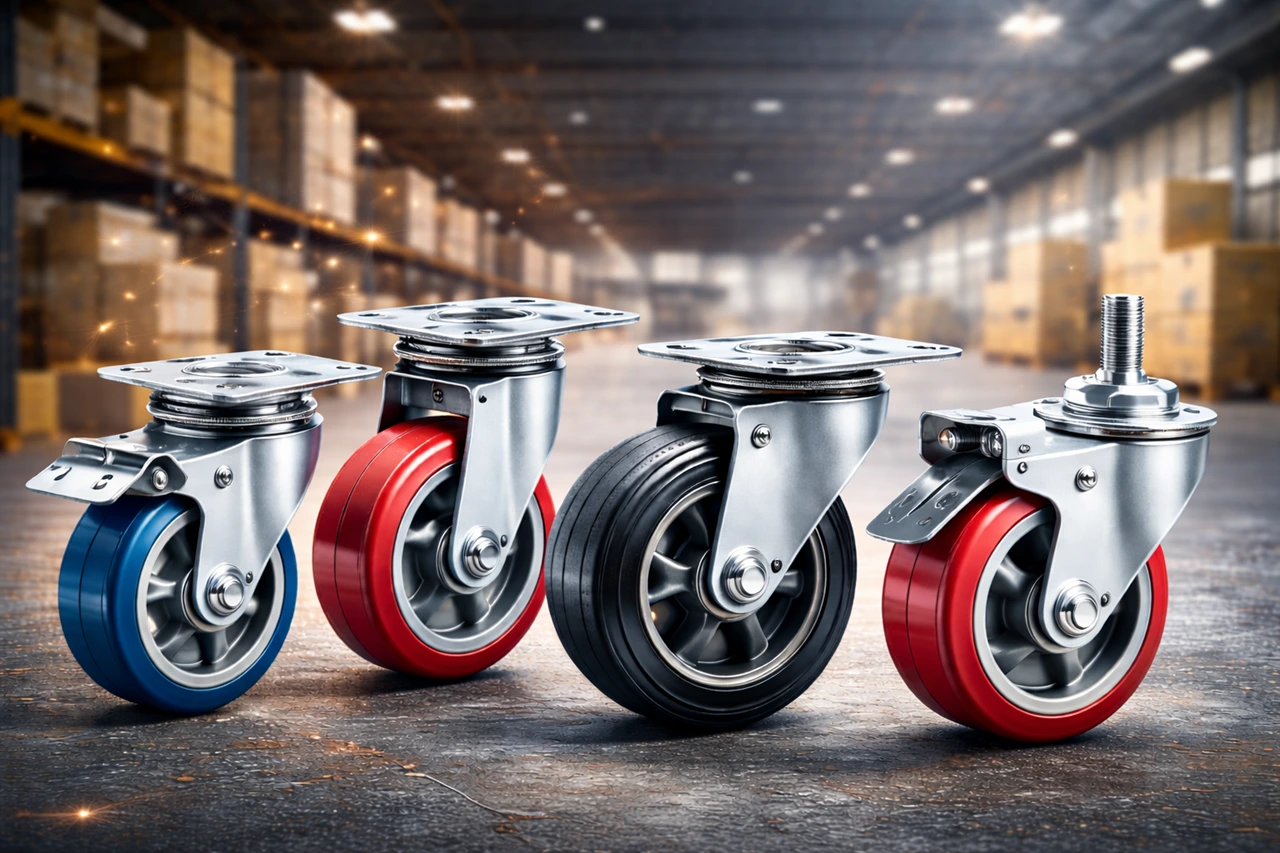
- Top plate mount: stronger and more stable for heavy-duty equipment
- Bolt hole / stem mount: easier to fit, but depends on frame design
For heavy racks, trolleys, and workbenches, top plates are often preferred because they handle side forces better.
Related Articles:
» Best Hardware Store in Dubai for Plumbing Tools
» Fast-Moving Castor Wheel Sizes Commonly Used in Dubai Projects
» How to Choose the Right Castor Wheels for Industrial use in Dubai
» Best Castor Wheels for Warehouse Trolleys and Pallet Dollies in Dubai
» Wholesale Gate Pulleys in Dubai for Sliding Gates
7) Brakes & Locks: Safety + Control
In warehouses, brakes are not only for parking. They help during loading, sorting, and stopping on slight slopes.
Common brake types:
- Wheel brake: stops the wheel only
- Total lock brake: locks wheel + swivel (more stable)
- Directional lock: keeps wheel moving straight (very useful in long aisles)
For mobile workstations, total locks are usually a strong pick. For long-distance trolley runs, directional locks can make movement easier. Buy Wholesale Hardware Shop
8) Floor Conditions & Rolling Resistance
If staff are constantly pushing harder than they should, it’s usually due to rolling resistance.
Causes include:
- Wheel too small
- Wrong material for the floor
- Weak bearings
- Overloading
- Dust buildup and lack of basic checks
On smooth epoxy floors, non-marking PU or quality rubber can work well. On rough concrete, a slightly softer tread often reduces vibration and noise.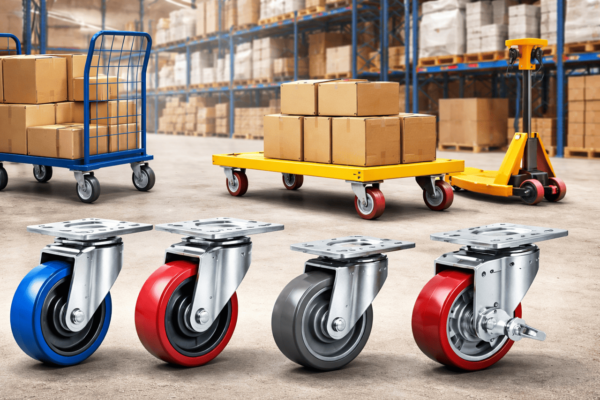
Quick Buying Checklist for Warehouse Castors (Dubai)
Before you order, confirm:
- Total weight + safety factor
- Floor type (epoxy / tile / concrete)
- Daily movement distance
- Space and turning needs
- Brake type required
- Dust level and maintenance plan
When those points are clear, you don’t “guess” castors—you select them properly. And yes, you’ll notice the difference immediately.
FAQs on “Heavy-Duty Castor Wheels for Warehouses”
1) What is a heavy-duty castor wheel in warehouse use?
A castor designed for high loads with stronger forks, dependable bearings, and durable wheel materials like PU or nylon.
2) Are PU castor wheels good for warehouse floors?
Yes. PU castor wheels are popular because they handle weight well and are usually kinder to epoxy and tiled floors.
3) How do I calculate load capacity per castor?
Take total weight, divide by number of wheels, then add a safety factor of 1.3–1.5 for real movement conditions.
4) Which wheel size is best for warehouse trolleys?
Some warehouses utilize 125mm – 200mm however for tractive effort and rough floor straddle larger diameters are often better.
5) What bearing is best for daily warehouse use?
For frequent travel, ball bearings (sealed bearings) tend to roll more smoothly rolling and longer service life.
6) Do nylon wheels make noise?
They can.Nylon is robust, but it generally rolls louder than PU—particularly on hard surfaces.
7) What’s the best castor arrangement: 2 rigid and 2 swivel?
In many cases yes, because it tracks straight better and is easier to control in long aisles.
8) What is a total lock brake?
A brake that locks both the wheel and swivel, helping the trolley stay still during loading or when parked.
9) Why do castor wheels wobble?
This is often due to overloading, improper mounting, worn bearings or using a wheel size that doesn’t match the fork strength.
10) Are steel or cast iron wheels good for warehouses?
They are strong but noisy and they can cause damage to floors.They are more well-suited for rough floors than for such epoxy/tile surfaces
11) How do I reduce floor marks from castors?
Use non marking PU or floor friendly materials, make sure you have the correct load rating and wheel width.
12) How often should warehouse castors be checked?
Doing a quick monthly inspection also helps—see if your bearings, mounting bolts, tread wear and brakes are all working. It prevents sudden failures.